
ASME SA387 Grade 91 Class 2 Plates – A387 Gr 91 Cl 2 Chrome-Moly-V Pressure Vessel Plates
ASC LLP, Mumbai, supplies ASME SA387 Grade 91 Class 2 plates (ASTM A387 Gr 91 Cl 2) in 6 mm to 100 mm thickness, normalised and tempered, from approved mills. In addition, every plate comes with an EN 10204 3.1 certificate showing chemistry, heat treatment and test results.
What is SA387 Grade 91 Steel?
ASME SA387 / ASTM A387 is the specification for chromium-molybdenum alloy steel plates for pressure vessels in elevated-temperature service. Within it, Grade 91 (UNS K90901) is a modified 9% chromium – 1% molybdenum steel with controlled additions of vanadium, niobium and nitrogen. As a result, it has much higher creep strength than Grade 22 or Grade 9, so thinner vessel walls can be used at the same temperature.
Grade 91 is supplied only in Class 2, the higher-strength class, so “SA387 Gr 91 Cl 2” is the normal designation. For this reason, plate for P91 headers, HRSG drums and high-temperature vessels is ordered as SA387 Grade 91 Class 2, normalised and tempered.
SA387 Grade 91 Class 2 – Quick Facts
- Specification: ASME SA387 / ASTM A387, Grade 91 Class 2 (UNS K90901)
- Composition: 8.0–9.5% Cr, 0.85–1.05% Mo, plus V, Nb and N
- Strength: 585–760 MPa tensile / 415 MPa yield min
- Condition: first normalised, then tempered
- Thickness: 6 mm to 100 mm (others on request)
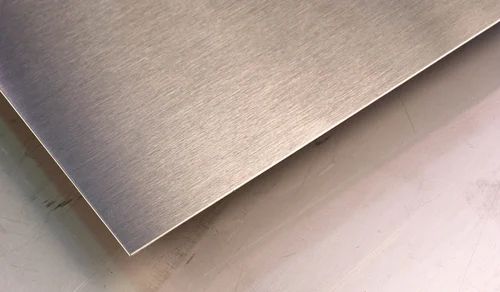
SA387 Gr 91 – Normalized and Tempered
Grade 91 gets its strength from a tempered martensite structure, so the heat treatment is critical. Therefore, every plate is normalised (typically at about 1040–1080 °C) and then tempered (typically at about 730–800 °C).
- Too low a normalising temperature can leave the alloy carbides undissolved, so creep strength is lost.
- Too low a tempering temperature, on the other hand, leaves the plate hard and brittle.
- As-rolled or annealed Grade 91 is not acceptable for pressure service; in other words, always check the normalising and tempering temperatures on the certificate.
Grade 91 Class 1 vs Class 2
A387 lists most grades in Class 1 and Class 2. However, Grade 91 is covered only in Class 2, so any order for “Grade 91 Class 1” should be checked with the designer. See also our Grade 91 Class 1 page and the ASME SA387 plates hub.
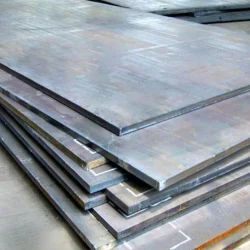
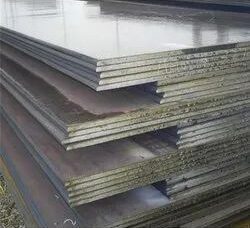
SA387 Grade 91 Class 2 Plate Sizes & Weights
| Thickness (mm) | Weight (kg/m²) |
| 6 | 47.1 |
| 8 | 62.8 |
| 10 | 78.5 |
| 12 | 94.2 |
| 16 | 125.6 |
| 20 | 157.0 |
| 25 | 196.2 |
| 30 | 235.5 |
| 40 | 314.0 |
| 50 | 392.5 |
| 60 | 471.0 |
| 80 | 628.0 |
| 100 | 785.0 |
Plates are available from 1500 to 3000 mm wide and up to 12000 mm long. Weights are calculated at 7.85 kg/m² per mm of thickness. In addition, plates can be supplied cut to size, as circles or as rolled shell sections to drawing.
SA387 Grade 91 Class 2 Mechanical Properties
| Property | SA387 Grade 91 Class 2 |
| Tensile strength | 585 – 760 MPa (85 – 110 ksi) |
| Yield strength, min | 415 MPa (60 ksi) |
| Elongation in 50 mm, min | 18% |
These are room-temperature requirements. However, Grade 91 is chosen for its creep strength at 550–620 °C, which the ASME Section II allowable stresses reflect. In addition, buyers often order tests on coupons given a simulated post-weld heat treatment.
SA387 Grade 91 Class 2 Plate Specifications
| Item | Details |
| Specification | ASME SA387 / ASTM A387, Grade 91 Class 2 |
| Condition | Normalised and tempered |
| Thickness | 6 mm to 100 mm; also thicker on request |
| Width / length | Up to 3000 mm wide and 12000 mm long, or alternatively cut to size |
| General requirements | ASTM A20 / ASME SA20 |
| Testing | Tensile and chemistry per plate; in addition, UT (A435 / A578), simulated PWHT, hardness and impact on request |
| Certificate | EN 10204 3.1; also 3.2 and IBR on request |
SA387 Grade 91 Chemical Composition
| Element | SA387 Grade 91 (%) |
| Carbon (C) | 0.08 – 0.12 |
| Manganese (Mn) | 0.30 – 0.60 |
| Phosphorus (P) | 0.020 max |
| Sulphur (S) | 0.010 max |
| Silicon (Si) | 0.20 – 0.50 |
| Nickel (Ni) | 0.40 max |
| Chromium (Cr) | 8.00 – 9.50 |
| Molybdenum (Mo) | 0.85 – 1.05 |
| Vanadium (V) | 0.18 – 0.25 |
| Niobium (Nb) | 0.06 – 0.10 |
| Nitrogen (N) | 0.030 – 0.070 |
| Aluminium (Al) | 0.02 max |
| Titanium (Ti) | 0.01 max |
| Zirconium (Zr) | 0.01 max |
Vanadium, niobium and nitrogen form fine carbonitrides, which give Grade 91 its creep strength. However, aluminium is kept very low, because it ties up nitrogen. In addition, recent editions split Grade 91 into Type 1 and Type 2, with tighter residual limits for Type 2, so state the type if your project specification requires it.
SA387 Grade 91 Equivalent & Matching Grades
| Product form | Matching 9Cr-1Mo-V grade |
| Seamless pipe | ASTM A335 P91 |
| Buttweld fittings | ASTM A234 WP91 |
| Forged fittings | ASTM A182 F91 |
| Flanges | ASTM A182 F91 flanges |
| Tubes | ASME SA213 T91 |
| EN equivalent | X10CrMoVNb9-1 (1.4903) |
Because these grades share the same chemistry, a P91 system can be built from plate, pipe, fittings and flanges of one material family. Welding Grade 91 plate, however, needs care: it is a P-No. 15E material, so it requires preheat of about 200 °C or higher, B9 filler metal (E9015-B9 / ER90S-B9) and PWHT, typically at about 730–770 °C.
Applications of SA387 Grade 91 Class 2 Plates
| Industry | Typical SA387 Grade 91 use |
| Power generation | Headers and steam drums, as well as pressure parts in supercritical boilers |
| HRSG plants | Superheater as well as reheater headers, because they run hottest |
| Refining | Hydroprocessing reactors, since hydrogen and heat act together |
| Petrochemical | High-temperature separators as well as heat exchanger shells |
Grade 91 resists high-temperature oxidation and has excellent creep strength. However, it is not a stainless steel, so wet corrosive service still needs stainless or clad plate.
SA387 Grade 91 vs Grade 22 vs Grade 9
| Grade | Composition | Class 2 tensile / yield (MPa) | Typical use |
| Grade 22 Class 2 | 2¼Cr – 1Mo | 515–690 / 310 | Hydrogen service, while temperatures stay below about 595 °C |
| Grade 9 Class 2 | 9Cr – 1Mo | 515–690 / 310 | High-temperature sulphidation, because of its 9% Cr |
| Grade 91 Class 2 | 9Cr – 1Mo – V – Nb | 585–760 / 415 | Highest creep strength, up to about 650 °C |
In short, Grade 91 is the high-strength choice for the hottest pressure parts, while Grade 22 and Grade 9 suit lower temperatures or sulphur service. See also our Grade 5 plates and our alloy steel products.
Frequently Asked Questions – SA387 Grade 91 Class 2 Plates
What is SA387 Grade 91 steel?
SA387 Grade 91 is a modified 9% chromium – 1% molybdenum pressure vessel plate with vanadium, niobium and nitrogen additions. It is used for high-temperature boiler and refinery equipment.
Is SA387 Gr 91 normalized and tempered?
Yes. Grade 91 plate is normalised (about 1040–1080 °C) and then tempered (about 730–800 °C), because its creep strength depends on that heat treatment.
What is the chemical composition of SA387 Grade 91?
It contains C 0.08–0.12%, Cr 8.00–9.50%, Mo 0.85–1.05%, V 0.18–0.25%, Nb 0.06–0.10% and N 0.030–0.070%. In addition, P is limited to 0.020%, S to 0.010% and Al to 0.02% max.
What are the mechanical properties of SA387 Grade 91 Class 2?
Tensile strength is 585–760 MPa (85–110 ksi), yield strength is 415 MPa (60 ksi) min and elongation is 18% min in 50 mm.
Is there an SA387 Grade 91 Class 1?
No. A387 covers Grade 91 only in Class 2, so plates are ordered as SA387 Grade 91 Class 2.
What is the equivalent of SA387 Grade 91?
The closest EN grade is X10CrMoVNb9-1 (1.4903). In addition, the matching product grades are A335 P91 pipe, A182 F91 forgings and SA213 T91 tubes.
Is SA387 Grade 91 weldable?
Yes, but it needs strict control. Grade 91 is P-No. 15E, so it requires preheat, matching B9 filler metal and post-weld heat treatment.
Global Supply
ASC LLP supplies ASME SA387 Grade 91 Class 2 plates from Mumbai to customers in India, the Middle East, Europe, Africa, the Americas and South-East Asia. To get a prompt quotation, simply send your enquiry with thickness, size, testing and quantity.

Countries We Export To
UNITED STATES, EUROPE, UK, UAE, SAUDI ARABIA, OMAN, KUWAIT, JORDAN, QATAR, INDONESIA, MALAYSIA, BRAZIL, SPAIN, ITALY, FRANCE, GERMANY, BAHRAIN, SRI LANKA, AZERBAIJAN, AUSTRALIA, AUSTRIA, PHILIPPINES, TURKEY, RUSSIA, IRAN, IRAQ, CANADA, KOREA, JAPAN, YEMEN, FINLAND, ZIMBABWE, HUNGARY, PORTUGAL, VIETNAM, MOROCCO, THAILAND, SOUTH AFRICA, MEXICO, SINGAPORE, GREECE, KUWAIT, POLAND, NEW ZEALAND, SWEDEN, SWITZERLAND, BELGIUM, BHUTAN, BANGLADESH, TAIWAN, ROMANIA, CAMBODIA, KAZAKHSTAN, AFGHANISTAN.
