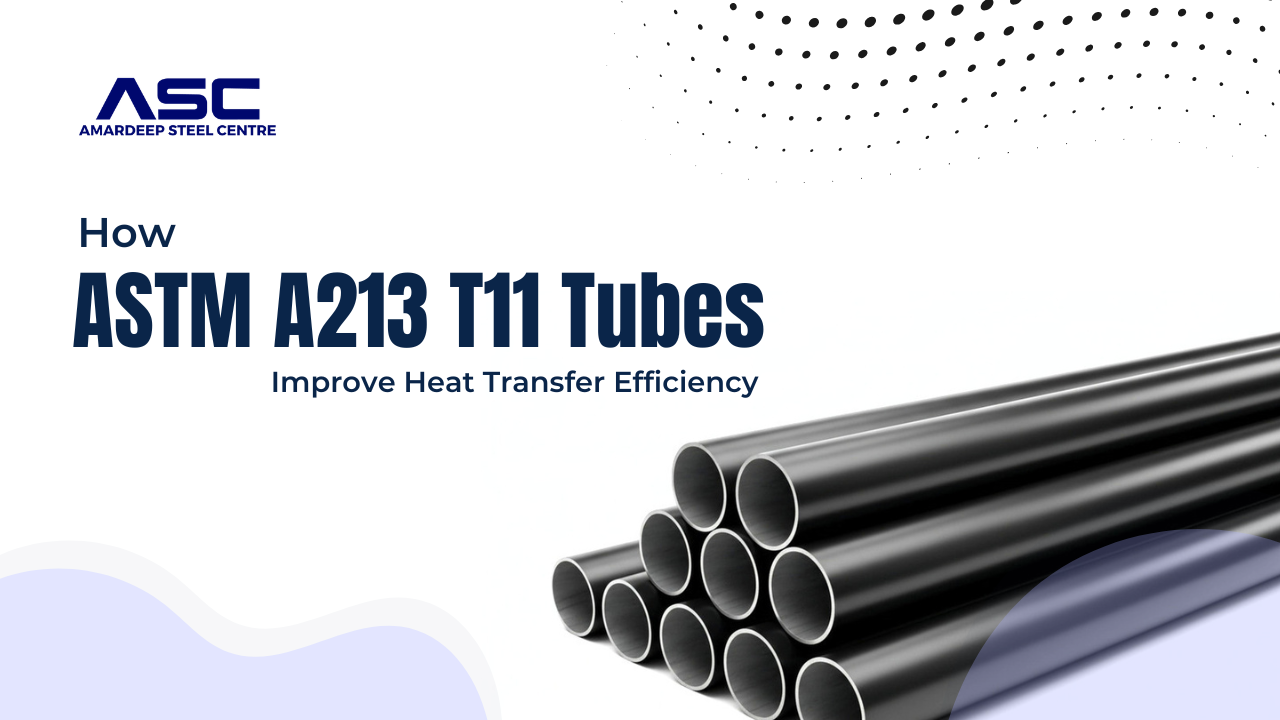
How ASTM A213 T11 Tubes Improve Heat Transfer Efficiency
Heat exchangers in industrial systems must operate reliably under fluctuating temperatures and high-pressure conditions. Selecting the right material is critical to ensure efficiency, safety, and long-term performance.
In modern industrial systems, heat exchangers play a crucial role in maintaining energy efficiency and operational performance. The choice of tubing material significantly impacts heat transfer rates, durability, and overall system reliability.
Among various alloy steels, ASTM A213 T11 tubing stands out as a preferred solution due to its excellent thermal conductivity, strength, and resistance to high temperatures. Widely used across European industries, Alloy Steel T11 Tubes help optimize heat exchanger performance in demanding environments.
What Are ASTM A213 T11 Tubes?
ASTM A213 T11 tubing is a chromium-molybdenum (Cr-Mo) alloy steel designed for high-temperature service. It is commonly supplied as seamless tubes under:
- ASME SA213 T11 tubing
- ASME SA213 T11 Alloy Steel Seamless Tubes
- ASME SA213 T11 Alloy Steel SMLS Tubes
These tubes comply with the ASTM A213 Standard, ensuring consistent quality and performance for heat exchanger and boiler applications.
They are also equivalent to:
- UNS K11597 T11 Boiler Tube
- EN 10216-2 10CrMo5-5 Boiler Fin Tube (European equivalent)
Why Heat Transfer Efficiency Matters in Heat Exchangers
Efficient heat transfer is critical for:
- Reducing energy consumption
- Improving system output
- Minimizing operational costs
- Enhancing equipment lifespan
The performance of a heat exchanger largely depends on the thermal properties and surface characteristics of the tubing used.
How ASTM A213 T11 Tubes Improve Heat Transfer Efficiency
1. Excellent Thermal Conductivity
Alloy Steel T11 Tubes offer reliable thermal conductivity, allowing heat to transfer quickly between fluids. This ensures:
- Faster heat exchange cycles
- Improved system efficiency
- Reduced energy loss
2. High Temperature Resistance
Heat exchangers often operate under extreme temperatures.
ASME SA213 T11 Alloy Steel Seamless Tubes maintain their strength and thermal performance even at elevated temperatures, ensuring consistent heat transfer without material degradation.
3. Thin Wall Seamless Construction
Seamless ASTM A213 T11 tubing allows for:
- Uniform wall thickness
- Reduced thermal resistance
- Better heat flow across the tube surface
This directly enhances heat transfer efficiency compared to welded alternatives.
4. Compatibility with Fin Tubes
EN 10216-2 10CrMo5-5 Boiler Fin Tube equivalents highlight the compatibility of T11 tubes with finned designs.
Finned tubes:
- Increase surface area
- Enhance heat dissipation
- Improve exchanger performance
5. Resistance to Scaling and Oxidation
Over time, deposits and oxidation can reduce heat transfer efficiency.
UNS K11597 T11 Boiler Tube offers:
- Good oxidation resistance
- Reduced scale formation
- Consistent thermal performance over time
6. Stability Under Thermal Stress
Frequent heating and cooling cycles can impact efficiency.
ASTM A213 T11 Tubing Specification ensures:
- Minimal thermal expansion distortion
- Stable performance under fluctuating temperatures
- Reduced risk of efficiency loss
Role in Advanced Heat Exchanger Designs
Modern heat exchangers, especially in Europe, require materials that can support high efficiency and sustainability goals.
T11 Alloy seamless rectangular tube and round tube variants are used in:
- Shell and tube heat exchangers
- Boilers and superheaters
- Economizers
- Waste heat recovery systems
Key Specifications of ASTM A213 T11 Tubes
Chemical Composition (Typical)
| Element | Percentage |
| Carbon (C) | 0.05–0.15 |
| Chromium (Cr) | 1.00–1.50 |
| Molybdenum (Mo) | 0.44–0.65 |
Mechanical Properties
| Property | Value |
| Tensile Strength | ≥ 415 MPa |
| Yield Strength | ≥ 205 MPa |
| Elongation | ≥ 30% |
Comparison: T11 vs Other Materials in Heat Transfer
| Feature | ASTM A213 T11 | Carbon Steel | Stainless Steel |
| Heat Transfer Efficiency | High | Moderate | High |
| High Temp Resistance | Excellent | Low | High |
| Cost | Moderate | Low | High |
| Durability | High | Moderate | Excellent |
Compliance with European Standards
For European industries, compliance is critical.
ASTM A213 / ASME SA213 T11 Alloy Steel Seamless Tube Manufacturer products are often aligned with:
- EN standards
- PED (Pressure Equipment Directive)
- TÜV certification requirements
This ensures safe and efficient integration into industrial systems.
How to Select the Right T11 Tubing for Heat Exchangers
When choosing ASTM A213 T11 tubing, consider:
- Operating temperature range
- Heat transfer requirements
- Tube dimensions and surface finish
- Certification and compliance standards
Working with a reliable ASTM A213 / ASME SA213 T11 Alloy Steel Seamless Tube Manufacturer ensures consistent quality and performance.
Conclusion
Efficient heat transfer is essential for optimizing industrial processes, and material selection plays a key role in achieving this goal. ASTM A213 T11 tubing offers the ideal combination of thermal conductivity, high-temperature strength, and durability.
Whether used in boilers, heat exchangers, or energy systems, Alloy Steel T11 Tubes significantly enhance heat transfer efficiency—making them a trusted choice for industries across Europe.
Explore the full range of ASTM A213 T11 tubes at ASC LLP, and let us help you elevate your projects to new heights. Follow us on LinkedIn, Facebook, and Instagram.