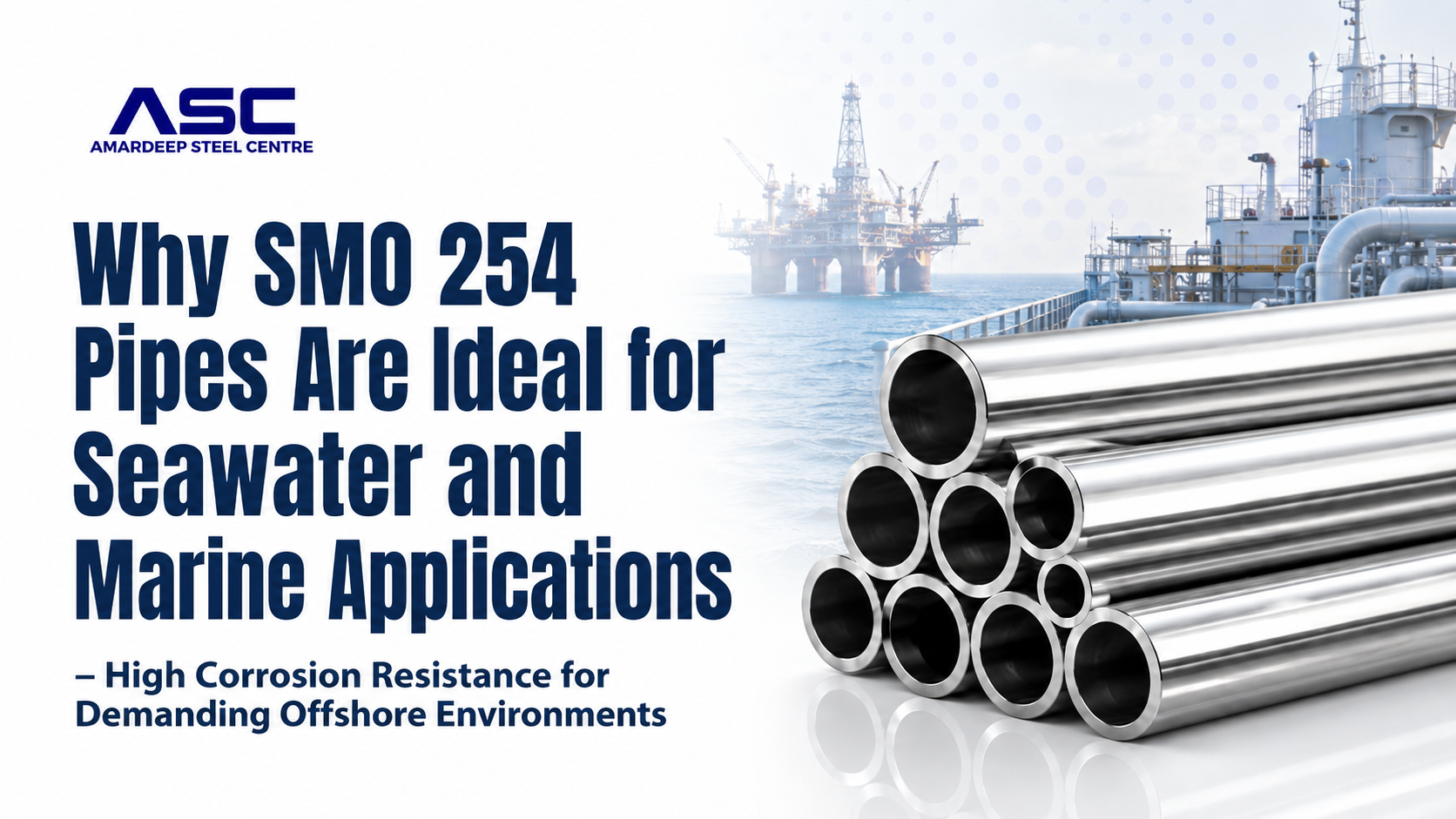
Why SMO 254 Pipes Are Ideal for Seawater and Marine Applications
The marine industry demands materials that can withstand some of the harshest operating environments on earth. Continuous exposure to seawater, high chloride concentrations, fluctuating temperatures, and aggressive corrosion conditions can quickly deteriorate conventional stainless steel piping systems. This is where SMO 254 Pipes stand out as one of the most reliable solutions for marine and offshore applications.
Known for their exceptional corrosion resistance, high mechanical strength, and long service life, 254 SMO Pipe products have become the preferred choice for seawater handling systems, desalination plants, offshore platforms, shipbuilding projects, and marine heat exchangers.
In this article, we will explore why ASTM A312 UNS S31254 Pipe is considered the ideal piping material for seawater and marine environments.
What Are SMO 254 Pipes?
SMO 254 Pipes are high-alloy austenitic stainless steel pipes containing approximately 6% molybdenum, along with elevated levels of chromium, nickel, and nitrogen. The alloy is designated as UNS S31254 and is commonly supplied under the specification ASTM A312 UNS S31254 Pipe.
This advanced alloy was specifically developed to provide superior resistance against chloride-induced corrosion, making it highly suitable for marine and seawater applications.
Chemical Composition Highlights
- Chromium: ~20%
- Nickel: ~18%
- Molybdenum: ~6.1%
- Nitrogen: ~0.2%
Due to its high molybdenum content, it is often referred to as a 6% Moly Stainless Steel Pipe, offering corrosion performance significantly better than standard 316L stainless steel.
Challenges of Seawater Applications
Seawater contains high concentrations of chlorides, dissolved oxygen, and biological contaminants that create an extremely corrosive environment for metal piping systems.
Common issues faced by conventional materials include:
- Pitting corrosion
- Crevice corrosion
- Stress corrosion cracking
- Erosion-corrosion
- Galvanic corrosion
- Premature equipment failure
These challenges increase maintenance costs, reduce system efficiency, and lead to unexpected downtime.
Why SMO 254 Pipes Are Ideal for Marine Environments
Exceptional Resistance to Chloride Corrosion
The primary reason SMO 254 Pipes are widely used in marine applications is their outstanding resistance to chloride attack.
The high chromium, molybdenum, and nitrogen content gives the alloy an extremely high Pitting Resistance Equivalent Number (PREN), allowing it to resist:
- Pitting corrosion
- Crevice corrosion
- Chloride-induced stress corrosion cracking
This makes UNS S31254 Seamless Pipe an excellent option for systems exposed to seawater and salt-laden environments.
Superior Performance in Seawater Systems
Seawater piping systems require materials capable of handling continuous exposure to highly corrosive fluids.
Applications include:
- Seawater intake pipelines
- Cooling water systems
- Ballast water systems
- Firewater systems
- Desalination plants
- Offshore oil and gas platforms
Compared to conventional stainless steels, ASTM A312 UNS S31254 Schedule 40 Pipe offers significantly longer service life and lower maintenance requirements.
High Strength and Durability
Marine structures and offshore installations often experience:
- High operating pressures
- Mechanical vibrations
- Dynamic loads
- Harsh weather conditions
The superior mechanical properties of 254 SMO Pipe help maintain structural integrity even under demanding operating conditions.
Benefits include:
- High tensile strength
- Excellent impact resistance
- Good fatigue resistance
- Reliable long-term performance
Excellent Weldability and Fabrication
For marine construction projects, ease of fabrication is essential.
1.4547 Welded Pipe offers excellent weldability while maintaining its corrosion resistance properties. Fabricators can easily manufacture:
- Process piping systems
- Offshore modules
- Heat exchanger tubing
- Desalination equipment
- Marine structural components
Proper welding procedures ensure long-lasting performance even in aggressive seawater environments.
Outstanding Resistance to Crevice Corrosion
Crevice corrosion commonly occurs in areas where seawater becomes trapped, such as:
- Flanged joints
- Bolted connections
- Gasket interfaces
- Support brackets
The alloy composition of SMO 254 Pipes significantly reduces the risk of crevice corrosion, making it suitable for complex marine piping systems.
Applications of SMO 254 Pipes in Marine Industries
Offshore Oil & Gas Platforms
Offshore facilities require materials that can withstand constant exposure to seawater and harsh atmospheric conditions.
Typical applications include:
- Firewater piping
- Produced water systems
- Cooling systems
- Utility piping
UNS S31254 Seamless Pipe provides reliable operation and minimizes maintenance costs.
Desalination Plants
Desalination facilities process large volumes of seawater every day. Components must resist chloride attack and scaling.
Common applications:
- Reverse osmosis systems
- Brine discharge lines
- Seawater feed pipelines
- High-pressure process piping
This is why many engineers specify ASTM A312 UNS S31254 Pipe for critical desalination infrastructure.
Shipbuilding Industry
Marine vessels require highly durable piping materials for:
- Ballast systems
- Bilge systems
- Cooling circuits
- Seawater handling systems
The superior corrosion resistance of 6% Moly Stainless Steel Pipe helps extend vessel service life while reducing maintenance requirements.
Marine Heat Exchangers
Heat exchangers operating with seawater demand materials that resist:
- Scaling
- Corrosion
- Erosion
SMO 254 Pipes deliver exceptional performance in heat exchanger systems where reliability is critical.
SMO 254 Seamless vs Welded Pipes
UNS S31254 Seamless Pipe
Advantages:
- Uniform structure
- Higher pressure capability
- Enhanced reliability for critical applications
- Suitable for offshore and high-pressure systems
1.4547 Welded Pipe
Advantages:
- Cost-effective solution
- Excellent corrosion resistance
- Easier availability in larger diameters
- Suitable for low to medium pressure marine applications
Both forms provide outstanding seawater corrosion resistance when manufactured according to industry standards.
Benefits of Choosing SMO 254 Pipes
Longer Service Life
The superior corrosion resistance of 254 SMO Pipe reduces replacement frequency and extends equipment lifespan.
Lower Maintenance Costs
Reduced corrosion means fewer repairs, inspections, and shutdowns.
Enhanced Reliability
Marine operators benefit from improved system uptime and operational safety.
Cost Savings Over Time
Although the initial investment may be higher than standard stainless steel grades, the lifecycle cost is significantly lower due to reduced maintenance and replacement expenses.
Why Engineers Prefer ASTM A312 UNS S31254 Schedule 40 Pipe
Many marine and offshore projects specify ASTM A312 UNS S31254 Schedule 40 Pipe because it provides:
- Excellent chloride resistance
- High pressure handling capability
- Superior structural integrity
- Long-term reliability
- Compliance with international standards
Its proven performance in aggressive seawater conditions makes it a trusted material across global marine industries.
Selecting Reliable SMO 254 Seamless Pipe Suppliers
When sourcing SMO 254 Pipes, it is important to work with experienced SMO 254 Seamless Pipe Suppliers who can provide:
- Certified material test reports
- International standard compliance
- Complete traceability
- Accurate dimensions and tolerances
- Third-party inspection support
Choosing a reputable supplier ensures consistent quality and long-term performance in demanding marine applications.
Conclusion
When it comes to seawater handling and marine applications, material selection directly impacts reliability, maintenance costs, and operational efficiency. SMO 254 Pipes offer exceptional resistance to pitting, crevice corrosion, and chloride-induced stress corrosion cracking, making them one of the most dependable piping solutions available today.