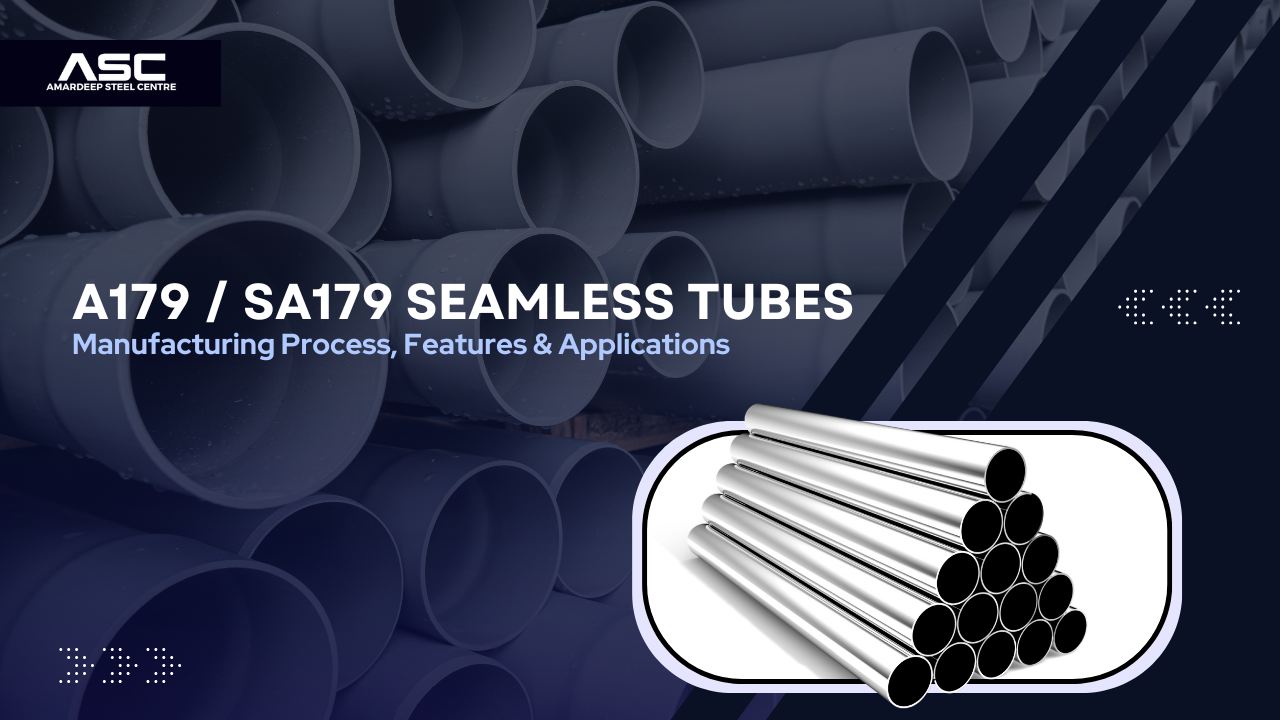
A179 / SA179 Seamless Tubes: Manufacturing Process, Properties & Applications
Quick answer: ASTM A179 / ASME SA179 tubes are seamless, cold-drawn, low-carbon steel tubes (3.2–76.2 mm OD) for heat exchangers and condensers. They are made by hot piercing a billet, cold drawing it to size and annealing at 650 °C (1,200 °F) or higher after the final draw, which keeps hardness at 72 HRB max so the tubes can be expanded, bent and flared without cracking. Every tube is hydrostatically tested.
What Are ASTM A179 / ASME SA179 Tubes?
ASTM A179 (ASME SA179 for pressure equipment) covers minimum-wall-thickness, seamless cold-drawn low-carbon steel tubes for tubular heat exchangers, condensers and similar heat-transfer equipment. The low carbon content and soft annealed condition make the tubes easy to roll into tube sheets, bend into U-tubes and flare – which is why A179 is the most common carbon-steel heat-exchanger tube.
A179 / SA179 Tube Manufacturing Process – Step by Step
- Steel and billet: killed low-carbon steel (0.06–0.18% C) is cast into round billets.
- Hot piercing and rolling: the heated billet is pierced and rolled into a seamless hollow (“mother tube”).
- Pickling and lubrication: scale is removed and a drawing lubricant is applied.
- Cold drawing: the hollow is drawn through a die and over a mandrel, often in several passes, to the final OD and minimum wall with a smooth surface and tight tolerances.
- Final heat treatment: after the last cold draw, tubes are heat treated at 650 °C (1,200 °F) or higher to remove cold-work hardness.
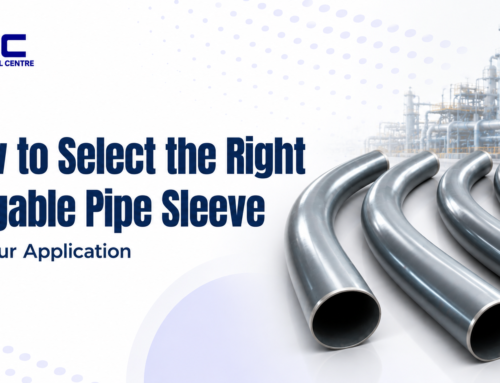
- Straightening, cutting and finishing: tubes are straightened, cut to length and, where specified, bent into U-tubes.
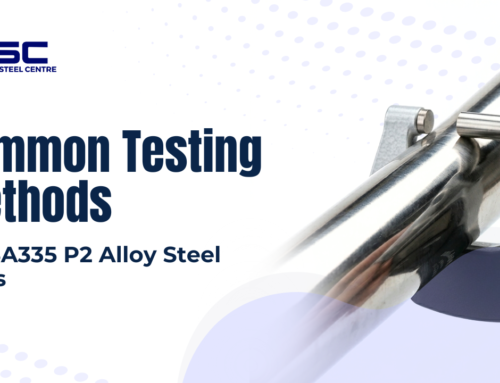
- Testing and marking: flattening, flaring, flange (thin walls) and hardness tests, plus a hydrostatic test (or nondestructive electric test) on every tube, then marking as per ASTM A179 / A450.
Chemical Composition of A179 / SA179 Tubes (wt %)
| Element | Requirement |
|---|---|
| Carbon (C) | 0.06 – 0.18 |
| Manganese (Mn) | 0.27 – 0.63 |
| Phosphorus (P) | 0.035 max |
| Sulphur (S) | 0.035 max |
Mechanical Properties of A179 / SA179 Tubes
| Property | Value |
|---|---|
| Tensile strength | 325 MPa (47 ksi) min |
| Yield strength | 180 MPa (26 ksi) min |
| Elongation in 50 mm | 35% min |
| Hardness | 72 HRB max |
Key Features of A179 Tubes
- Good thermal conductivity – carbon steel transfers heat better than stainless steel.
- Soft and ductile – 72 HRB max, so tubes expand into tube sheets and bend into U-tubes without cracking.
- Smooth, accurate cold-drawn surface – minimum-wall tubes with close OD tolerances.
- 100% pressure tested – hydrostatic or nondestructive electric test on every tube.
- Economical – the lowest-cost seamless heat-exchanger tube for non-corrosive service. Where corrosion is a concern, see heat-exchanger tube material selection.
Sizes & Supply Condition
| Item | Range |
|---|---|
| Outside diameter | 1/8″ to 3″ (3.2 – 76.2 mm) |
| Wall thickness | ≈ 0.9 – 7 mm (minimum-wall) |
| Length | Up to 12 m and above; cut lengths and U-tubes on request |
| Condition | Cold drawn and annealed, pickled / bright |
| Tests | Flattening, flaring, flange, hardness, hydrostatic or eddy-current |
Applications of A179 / SA179 Tubes
- Shell-and-tube heat exchangers in refineries, petrochemical and fertiliser plants
- Surface condensers and feed-water heaters
- Air coolers, oil coolers and process coolers
- Low-pressure heat-transfer coils
For boiler water-wall and economiser tubes use A192 or A210; see the A179 vs A210 comparison and our boiler tubes range.
Frequently Asked Questions
How are A179 / SA179 tubes made?
A179 tubes are made by the seamless process: a hot-pierced and rolled hollow is cold drawn to final size, then heat treated at 650 °C (1,200 °F) or higher after the final cold draw, straightened, pickled and tested.
Why are A179 tubes annealed after cold drawing?
Cold drawing hardens the steel. Annealing after the final draw softens it to 72 HRB maximum, so the tubes can be rolled into tube sheets, bent into U-tubes and flared without cracking.
What is the maximum hardness of A179 tube?
ASTM A179 / ASME SA179 limits hardness to 72 HRB (Rockwell B) maximum.
Is A179 tube suitable for boilers and superheaters?
A179 is intended for tubular heat exchangers, condensers and similar heat-transfer equipment. For boiler and superheater tubes, A192 (boiler tubes), A210 (medium-carbon) or alloy grades such as A213 T11, T22 and T91 are normally used.
What are the equivalents of ASTM A179?
Commonly quoted near-equivalents are EN 10216-2 P235GH, DIN 17175 St35.8, JIS G3461 STB340 and BS 3059 Part 1 grade 320. Always check chemistry and test requirements before substituting.
Buy A179 / SA179 Tubes from ASC LLP
ASC LLP, Mumbai, supplies ASTM A179 / ASME SA179 seamless tubes in all sizes, straight lengths and U-tubes, with EN 10204 3.1 certificates, IBR on request and third-party inspection. Send your requirement to sales@amardeepsteel.com or call 022-67439130.
Related reading: Why A179 tubes are preferred for heat exchangers · Heat-exchanger tube maintenance