
Nb-47Ti (NbTi) Niobium-Titanium Fittings & Components – ASTM B884
What is Nb-47Ti?
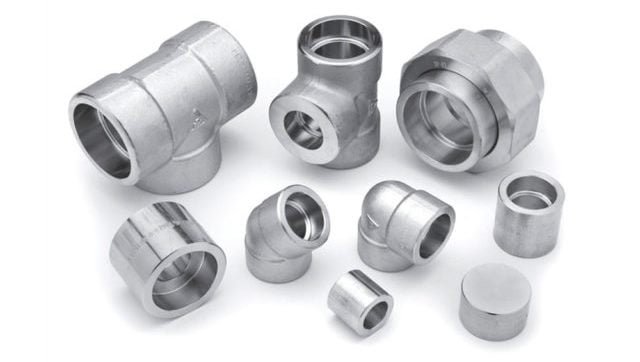
Nb-47Ti (also written NbTi or Nb-Ti) is a niobium-titanium alloy with 46–48% titanium by weight, balance niobium. It is the world’s most widely used superconducting alloy – the wire in MRI, NMR and particle-accelerator magnets – and it stays ductile and tough at liquid-helium temperatures, which also makes it useful for machined cryogenic components and fittings.
Note on specifications: Nb-47Ti is covered by ASTM B884 (niobium-titanium alloy billets, bar and rod for superconducting applications). ASTM B393 covers niobium and Nb-1Zr strip, sheet and plate – not Nb-Ti. Nb-47Ti fittings and components are machined from B884 bar or rod.
Nb-47Ti – Quick Facts
- Alloy: Nb-47Ti (Nb53Ti47, NbTi47), titanium 46–48 wt%
- Standard: ASTM B884 – rod 13–60 mm, bar 60–150 mm, billet 150 mm and over
- Condition: annealed; hardness average below 170 HV
- Product forms: rod, bar, billet; machined fittings, adaptors and cryogenic components to drawing
- Testing: ultrasonic and liquid-penetrant examination, grain size, chemistry and hardness per B884
- Certificate: EN 10204 3.1
ASC LLP, Mumbai, supplies Nb-47Ti bar, rod and machined components to drawing. See our full niobium & niobium alloy range.
Nb-47Ti Chemical Composition (ASTM B884)
| Element | Limit (ingot) |
| Titanium (Ti) | 46 – 48 % |
| Oxygen (O) | 1,000 ppm max |
| Tantalum (Ta) | 2,500 ppm max |
| Carbon (C) | 200 ppm max |
| Iron (Fe) | 200 ppm max |
| Nitrogen (N) | 150 ppm max |
| Aluminium (Al) | 100 ppm max |
| Chromium (Cr) | 100 ppm max |
| Copper (Cu) | 100 ppm max |
| Nickel (Ni) | 100 ppm max |
| Silicon (Si) | 100 ppm max |
| Hydrogen (H) | 45 ppm max |
| Niobium (Nb) | Balance |
Impurity limits are tight because inclusions and interstitials damage the fine filaments drawn from Nb-Ti for superconducting wire. Ingot sidewall samples are taken from at least three positions to confirm titanium homogeneity.
Mechanical & Quality Requirements (ASTM B884)
| Requirement | ASTM B884 |
| Hardness | Average of three readings below 170 HV (DPH) |
| Grain size, 0.5 – 2 in diameter | ASTM 4.5 or finer |
| Grain size, over 2 – 4.5 in | ASTM 2.5 or finer |
| Grain size, over 4 – 6 in | ASTM 1.5 or finer |
| Internal soundness | Ultrasonic test – no defects above 3% of diameter or 2.5 mm equivalent |
| Surface | Liquid-penetrant test – no cracks or linear indications |
B884 controls softness, grain size and internal soundness rather than tensile strength, because the material must be drawn down to very fine wire without breaking.
Nb-47Ti Product Forms & Sizes
| Form | Size range (ASTM B884) | Typical use |
| Rod | Over 13 mm to under 60 mm (0.5 – 2.5 in) | Machined fittings, adaptors and small cryogenic parts |
| Bar | 60 mm to under 150 mm (2.5 – 6 in) | Larger machined components, wire-drawing stock |
| Billet | 150 mm (6 in) and over | Extrusion billets for multifilament superconducting wire |
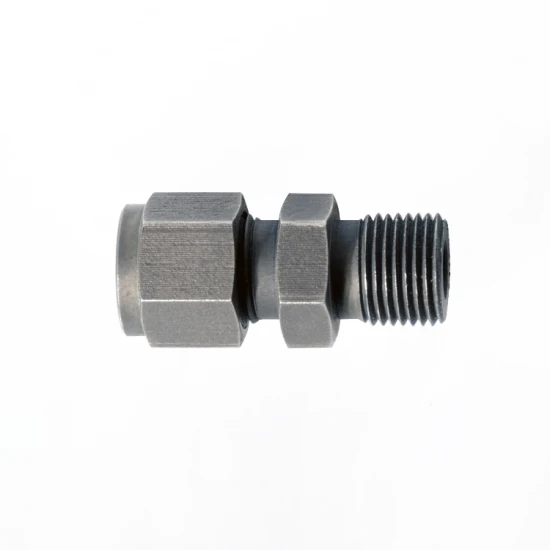
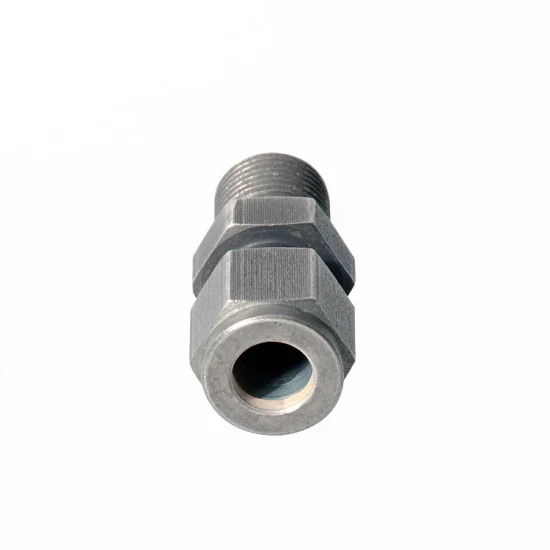
Fittings, adaptors and couplings in Nb-47Ti are machined to drawing from B884 rod or bar. For general piping, pure niobium, Nb-1Zr or titanium tube and fittings are normally used instead.
Physical & Superconducting Properties of Nb-47Ti
| Property | Value (approx.) |
| Density | ≈ 6.0 g/cm³ (much lighter than pure niobium, 8.57 g/cm³) |
| Superconducting critical temperature (Tc) | ≈ 9 – 10 K |
| Upper critical field at 4.2 K | ≈ 10 – 11 T |
| Crystal structure | Body-centred cubic (β phase) |
| Low-temperature behaviour | Remains ductile and tough at 4.2 K |
| Magnetic (normal state) | Non-magnetic |
Nb-47Ti vs Pure Niobium vs Nb-1Zr
| Property | Pure niobium (R04200) | Nb-1Zr (R04251) | Nb-47Ti |
| Main alloying | None | 0.8–1.2% Zr | 46–48% Ti |
| Standard | ASTM B392 / B393 / B394 | ASTM B392 / B393 / B394 | ASTM B884 |
| Density | 8.57 g/cm³ | ≈ 8.6 g/cm³ | ≈ 6.0 g/cm³ |
| Main use | Acid service, RF cavities, vacuum | Liquid-metal & nuclear service | Superconducting wire and magnets, cryogenic parts |
| Our page | R04200 fittings | Nb-1Zr fittings | This page |
Machining & Handling Nb-47Ti
- Machining: similar to titanium – sharp carbide tools, low speeds, heavy coolant; avoid work hardening and galling.
- Welding: TIG or electron-beam welding in high-purity argon or vacuum only; oxygen and nitrogen pick-up embrittles the joint.
- Heat treatment: anneal in vacuum or inert gas; precipitation heat treatments used in wire production are done by the wire maker.
- Oxidation: do not heat in air – both niobium and titanium absorb oxygen rapidly at high temperature.
Applications of Nb-47Ti
| Industry | Applications |
| Medical imaging | MRI and NMR magnet wire and cryogenic hardware |
| Particle physics | Accelerator dipole and quadrupole magnets, detector magnets |
| Fusion & research | Poloidal-field coils, test magnets, cryostat components |
| Cryogenic engineering | Machined adaptors, fittings and supports for liquid-helium systems |
| Industrial | Magnetic separation and high-field laboratory magnets |
Nb-47Ti is not used for jet engines, exhaust systems or acid piping. Aerospace rivets use a different titanium-rich alloy, Ti-45Nb.
How to Order Nb-47Ti
- Form and size: rod, bar or billet diameter and length – or a drawing for machined parts.
- Specification: ASTM B884, plus any customer wire-maker requirements.
- Testing: state if interstitial analysis on product, special grain size or extra UT is required.
- Quantity and delivery: including packing requirements for clean, contamination-free material.
Why Buy Nb-47Ti from ASC LLP?
- Correct specification: Nb-47Ti to ASTM B884 with 3.1 certificates showing titanium content, impurities, hardness and grain size.
- Machined to drawing: fittings, adaptors and cryogenic components from B884 rod and bar.
- Full niobium range: niobium fittings, niobium bars and C-103 alloy.
- Clean, protected export packing and worldwide shipment.
Send form, size, drawing and quantity to sales@amardeepsteel.com or call 022-67439130.
Frequently Asked Questions – Nb-47Ti Niobium-Titanium
What is Nb-47Ti?
Nb-47Ti (NbTi) is a niobium-titanium alloy containing 46–48% titanium by weight, balance niobium. It is the most widely used superconducting alloy, used for MRI, NMR and accelerator magnet wire.
Which ASTM standard covers Nb-47Ti?
ASTM B884 covers niobium-titanium alloy billets, bar and rod with 46–48% titanium for superconducting applications. ASTM B393 covers niobium and Nb-1Zr sheet and plate, not Nb-Ti.
What hardness does ASTM B884 require?
ASTM B884 requires the average of three hardness readings to be below 170 HV (DPH) in the annealed condition, along with grain-size, ultrasonic and penetrant requirements.
What is the superconducting temperature of NbTi?
Nb-Ti becomes superconducting below about 9–10 K and is normally operated in liquid helium at 4.2 K, where it can carry current in fields of roughly 10 T.
Are Nb-47Ti fittings used for normal piping?
Rarely. Nb-47Ti is mainly supplied as rod, bar and billet for superconducting wire and cryogenic components. For corrosion or high-temperature piping, pure niobium, Nb-1Zr or titanium fittings are normally used.
Global Reach
ASC LLP supplies niobium, niobium-titanium, tantalum and other refractory-metal products to research, medical and industrial customers worldwide, with secure packing and full documentation. Buyers in the USA, Europe, the Middle East and Asia rely on our Nb-47Ti niobium-titanium material for certified quality and traceability.

Countries We Export To
UNITED STATES, EUROPE, UK, UAE, SAUDI ARABIA, OMAN, KUWAIT, JORDAN, QATAR, INDONESIA, MALAYSIA, BRAZIL, SPAIN, ITALY, FRANCE, GERMANY, BAHRAIN, SRI LANKA, AZERBAIJAN, AUSTRALIA, AUSTRIA, PHILIPPINES, TURKEY, RUSSIA, IRAN, IRAQ, CANADA, KOREA, JAPAN, YEMEN, FINLAND, ZIMBABWE, HUNGARY, PORTUGAL, VIETNAM, MOROCCO, THAILAND, SOUTH AFRICA, MEXICO, SINGAPORE, GREECE, KUWAIT, POLAND, NEW ZEALAND, SWEDEN, SWITZERLAND, BELGIUM, BHUTAN, BANGLADESH, TAIWAN, ROMANIA, CAMBODIA, KAZAKHSTAN, AFGHANISTAN.
