
C-103 Niobium Flanges (C103, UNS R04295) – Supplier & Exporter
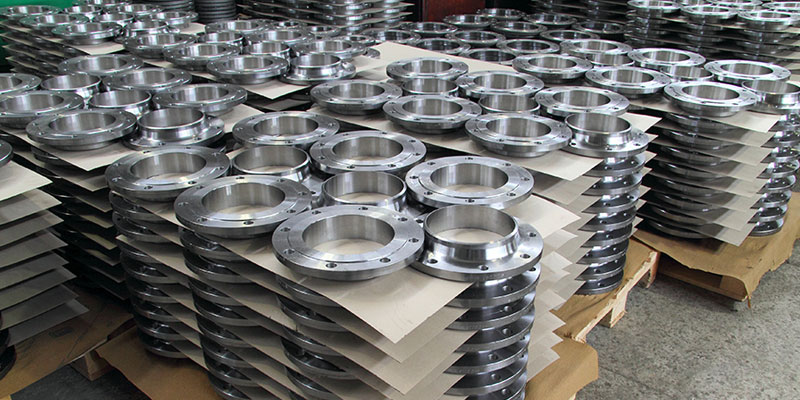
What are C-103 niobium flanges?
They are pipe and vacuum flanges machined from C-103 niobium alloy (also written C103 or Nb-10Hf-1Ti, UNS R04295) – about 89% niobium, 10% hafnium and 1% titanium. C-103 keeps useful strength up to about 1,370 °C (2,500 °F), stays ductile and weldable at room temperature, and is the standard alloy for rocket and satellite thruster hardware.
Note on specifications: ASTM B392 covers unalloyed niobium and Nb-1Zr bar, rod and wire (R04200, R04210, R04251, R04261). C-103 is covered by ASTM B655 (bar, rod, wire) and ASTM B654 (sheet, strip, plate), so C-103 flanges are machined from B655 bar or B654 plate and certified to those standards.
C-103 Niobium Flanges – Quick Facts
- Alloy: C-103 / C103, Nb-10Hf-1Ti, UNS R04295
- Raw material: ASTM B655 bar / B654 plate, AMS 7852 / AMS 7857
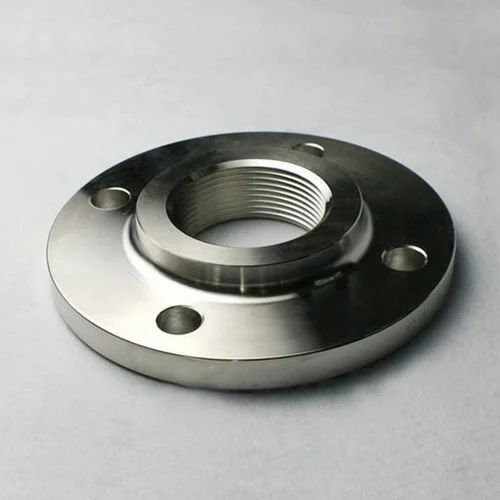
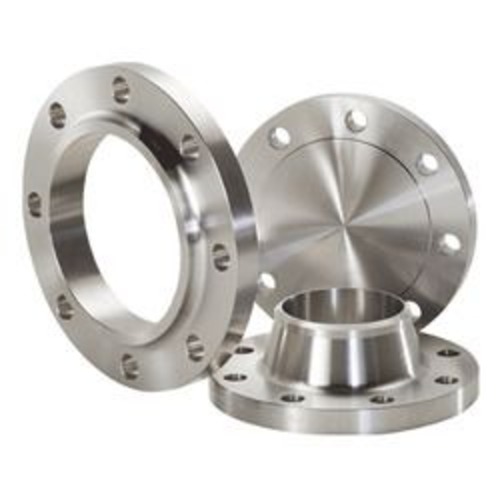
- Flange types: weld neck, slip-on, blind, lap joint, plate and custom vacuum flanges
- Dimensions: ASME B16.5 profiles or customer drawing
- Certificate: EN 10204 3.1 with interstitial (C, O, N, H) analysis
ASC LLP, Mumbai, supplies C-103 niobium flanges machined to drawing, along with C-103 fasteners and fittings. For C-103 bar, sheet, plate, pipe and wire, see our C-103 niobium alloy page.
C-103 Chemical Composition (UNS R04295)
| Element | Composition (wt %) |
| Hafnium (Hf) | 9.0 – 11.0 |
| Titanium (Ti) | 0.7 – 1.3 |
| Zirconium (Zr) | 0.70 max |
| Tantalum (Ta) | 0.50 max |
| Tungsten (W) | 0.50 max |
| Carbon (C) | 0.015 max |
| Oxygen (O) | 0.0225 max |
| Nitrogen (N) | 0.015 max |
| Hydrogen (H) | 0.0010 max |
| Niobium (Nb) | Balance (≈ 89%) |
Limits per ASTM B654 / B655. C-103 contains about 10% hafnium and 1% titanium – not 10% titanium. Interstitial elements are held very low because they reduce ductility.
Mechanical Properties of C-103 Flanges
| Property | Room temperature (annealed, min.) | At 1,095 °C / 2,000 °F (typical) |
| Ultimate tensile strength | 370 MPa (54 ksi) | 145 MPa (21 ksi) |
| Yield strength (0.2% offset) | 260 MPa (38 ksi) | 110 MPa (16 ksi) |
| Elongation | 20% | ≈ 20% |
Room-temperature values are ASTM B655 minimums for annealed (recrystallized) bar; elevated-temperature values are typical. C-103 is supplied annealed – it is not hardened by heat treatment.
C-103 Niobium Flanges Specifications
| Item | Details |
| Product | C-103 (C103) niobium alloy flanges |
| Material | UNS R04295, Nb-10Hf-1Ti |
| Raw material standards | ASTM B655 (bar), ASTM B654 (plate), AMS 7852 / 7857 |
| Flange types | Weld neck, slip-on, blind, lap joint, plate, ring, custom vacuum (CF/ISO-style) |
| Dimensions | ASME B16.5 profiles, or machined to customer drawing |
| Sizes | ½” upward; small-bore and custom diameters typical |
| Facing | Raised face, flat face, knife-edge / custom sealing faces |
| Condition | Annealed (fully recrystallized), machined |
| Optional coating | Silicide coating (e.g. R512E) for hot service in air |
| Certificate | EN 10204 3.1; third-party inspection on request |
We also supply unfinished C-103 niobium alloy – bar, rod, sheet, plate, pipe and wire – for in-house machining.
Reference Dimensions – Class 150 Profile (ASME B16.5)
| Size (NB) | Flange OD | Bolt circle | No. of bolts | Bolt size |
| ½” | 3.50″ (88.9 mm) | 2.38″ (60.3 mm) | 4 | ½” |
| ¾” | 3.88″ (98.4 mm) | 2.75″ (69.9 mm) | 4 | ½” |
| 1″ | 4.25″ (108.0 mm) | 3.12″ (79.4 mm) | 4 | ½” |
| 1½” | 5.00″ (127.0 mm) | 3.88″ (98.4 mm) | 4 | ½” |
| 2″ | 6.00″ (152.4 mm) | 4.75″ (120.7 mm) | 4 | ⅝” |
| 3″ | 7.50″ (190.5 mm) | 6.00″ (152.4 mm) | 4 | ⅝” |
| 4″ | 9.00″ (228.6 mm) | 7.50″ (190.5 mm) | 8 | ⅝” |
ASME B16.5 has no pressure-temperature rating for niobium alloys, so B16.5 is used for dimensions only. Pressure rating and thickness for C-103 flanges are set by the purchaser’s design calculation; most C-103 flanges are machined to drawing.
C-103 vs ASTM B392 Niobium Flange Grades
| Grade | UNS | Standard for bar / flanges | Room-temp tensile / yield (min) | Best for |
| Reactor-grade niobium | R04200 | ASTM B392 | 125 / 73 MPa | Chemical, superconducting and vacuum service |
| Commercial-grade niobium | R04210 | ASTM B392 | 125 / 73 MPa | General corrosion service |
| Nb-1Zr, reactor grade | R04251 | ASTM B392 | 195 / 125 MPa | Nuclear and liquid-metal systems |
| Nb-1Zr, commercial grade | R04261 | ASTM B392 | 195 / 125 MPa | High-temperature corrosion service |
| C-103 (this page) | R04295 | ASTM B655 / B654 | 370 / 260 MPa | Load-bearing parts at high temperature |
Choose C-103 when the flange must carry load at high temperature; choose pure niobium or Nb-1Zr (B392) when corrosion resistance or nuclear compatibility matters more than strength.
High-Temperature Use, Coatings & Heat Treatment
| Topic | Details |
| Useful service temperature | Up to about 1,370 °C (2,500 °F) for structural parts |
| Oxidation | Oxidises rapidly in air above about 600 °C – hot parts in air need a protective coating |
| Typical coating | Silicide coatings such as R512E, applied after machining |
| Vacuum / inert service | Can be used uncoated in vacuum (space) or inert gas |
| Annealing | Recrystallization anneal in vacuum or inert gas (around 1,260 °C) – never in air |
Machining & Welding C-103 Flanges
- Machining: C-103 is soft and gummy – use sharp carbide or HSS tools, positive rake, low speeds and plenty of coolant to avoid galling.
- Welding: TIG or electron-beam welding in a high-purity argon chamber or vacuum; oxygen or nitrogen pick-up makes the weld brittle.
- Bolting: where the joint runs hot, use C-103 or other refractory-metal fasteners so that bolt and flange expand together.
- Mating with steel: niobium alloys expand much less than stainless steel – allow for this in hot bolted joints.
Physical Properties of C-103
| Property | Value (approx.) |
| Density | 8.85 g/cm³ (0.319 lb/in³) |
| Melting point | ≈ 2,350 °C (4,260 °F) |
| Crystal structure | Body-centred cubic (single phase) |
| Magnetic | Non-magnetic |
Applications of C-103 Niobium Flanges
| Industry | Applications for C-103 flanges |
| Space propulsion | Thruster and rocket-engine injector, chamber and nozzle flanges |
| Aerospace & defence | Hot-structure joints, hypersonic and missile test hardware |
| Test facilities | High-temperature test rigs and engine test stands |
| Vacuum furnaces | Hot-zone fixtures, flanged ports and hardware |
| Research & energy | High-temperature and liquid-metal experimental systems |
Other Niobium Products
Niobium & niobium alloys · Niobium bars · Niobium flanges · Niobium fittings · Niobium seamless pipes · Niobium plates
Why Buy C-103 Niobium Flanges from ASC LLP?
- Correct material: genuine C-103 (UNS R04295) to ASTM B655 / B654, with 3.1 certificates including interstitial analysis.
- Machined to drawing: standard B16.5 profiles or custom vacuum and thruster flanges.
- Complete joint: C-103 flanges, fasteners and fittings in one order.
- Small quantities: prototype and low-volume aerospace orders welcome.
- Secure export packing and worldwide shipment.
Send drawing or flange type, size, quantity and any coating requirement to sales@amardeepsteel.com or call 022-67439130.
Frequently Asked Questions – C-103 Niobium Flanges
What is C-103 niobium alloy?
C-103 (also written C103) is a niobium alloy with about 10% hafnium and 1% titanium, designated UNS R04295. It keeps useful strength up to about 1,370 °C while remaining ductile and weldable at room temperature.
Is C-103 covered by ASTM B392?
No. ASTM B392 covers unalloyed niobium and Nb-1Zr bar, rod and wire (R04200, R04210, R04251, R04261). C-103 bar and wire are covered by ASTM B655 and sheet and plate by ASTM B654, so C-103 flanges are machined from material to those standards.
What is the chemical composition of C-103?
C-103 contains 9.0–11.0% hafnium, 0.7–1.3% titanium, up to 0.70% zirconium, up to 0.50% each of tantalum and tungsten, very low carbon, oxygen, nitrogen and hydrogen, and balance niobium (about 89%).
What is the strength of C-103 niobium flanges?
Annealed C-103 has a minimum tensile strength of 370 MPa, minimum yield strength of 260 MPa and minimum elongation of 20% at room temperature. At about 1,095 °C typical tensile strength is around 145 MPa.
Do C-103 flanges need a coating?
Only for hot service in air. C-103 oxidises rapidly above about 600 °C in air, so silicide coatings such as R512E are used. In vacuum or inert gas, C-103 flanges can be used uncoated.
Global Reach
ASC LLP supplies niobium, tantalum and other refractory-metal products to aerospace, research and industrial customers worldwide, with secure packing and full documentation. Buyers in the USA, Europe, the Middle East and Asia rely on our C-103 niobium flanges for certified material and traceability.

Countries We Export To
UNITED STATES, EUROPE, UK, UAE, SAUDI ARABIA, OMAN, KUWAIT, JORDAN, QATAR, INDONESIA, MALAYSIA, BRAZIL, SPAIN, ITALY, FRANCE, GERMANY, BAHRAIN, SRI LANKA, AZERBAIJAN, AUSTRALIA, AUSTRIA, PHILIPPINES, TURKEY, RUSSIA, IRAN, IRAQ, CANADA, KOREA, JAPAN, YEMEN, FINLAND, ZIMBABWE, HUNGARY, PORTUGAL, VIETNAM, MOROCCO, THAILAND, SOUTH AFRICA, MEXICO, SINGAPORE, GREECE, KUWAIT, POLAND, NEW ZEALAND, SWEDEN, SWITZERLAND, BELGIUM, BHUTAN, BANGLADESH, TAIWAN, ROMANIA, CAMBODIA, KAZAKHSTAN, AFGHANISTAN.
