
C-103 (C103) Niobium Alloy Supplier – Bar, Sheet, Plate, Pipe & Wire
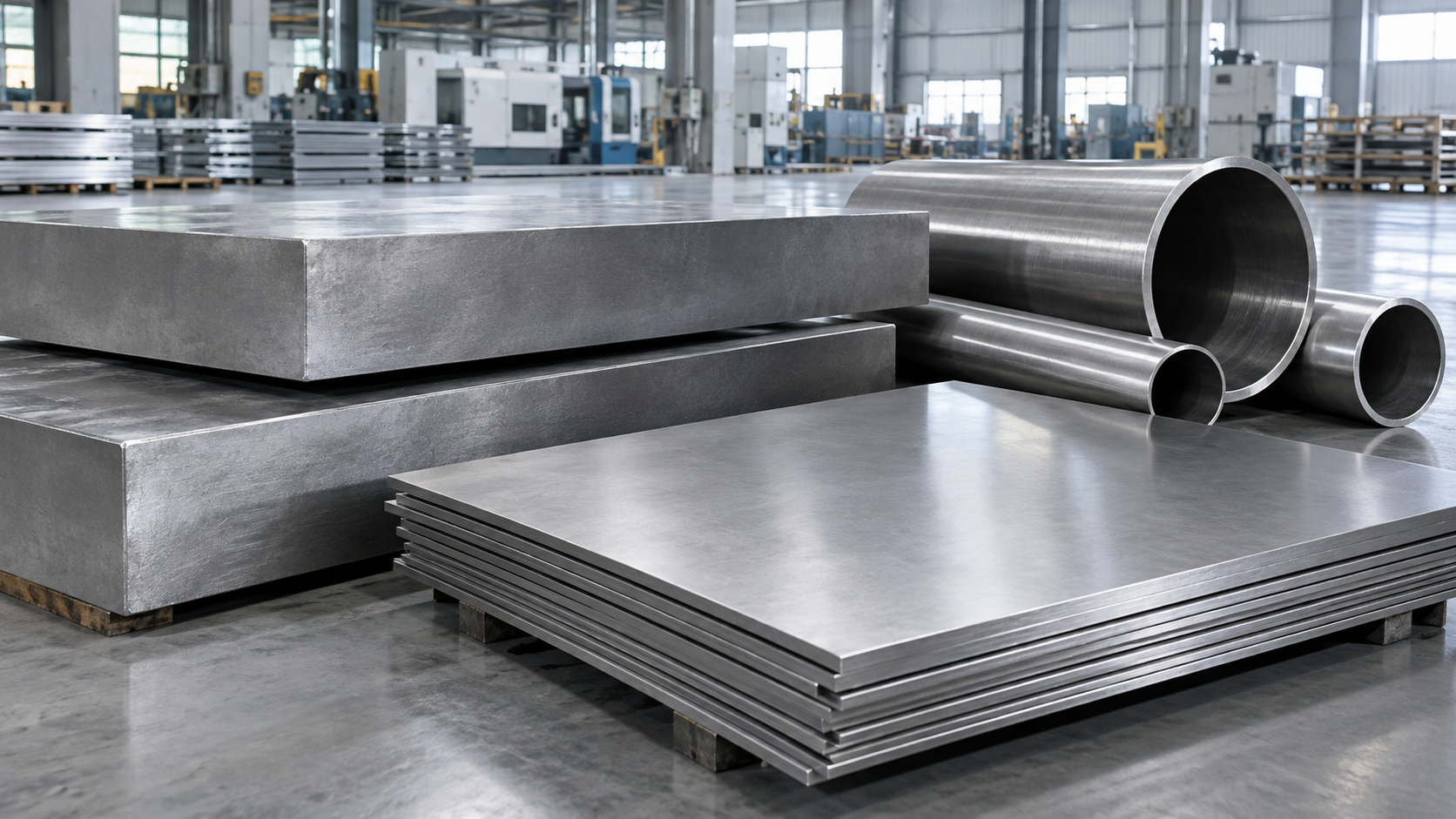
We supply C-103 niobium alloy – also written C103 or Nb-10Hf-1Ti (UNS R04295) – as round bar and rod, sheet and strip, plate, seamless and welded pipe and tube, and wire. Material is supplied to ASTM B654 / B655 and AMS specifications with mill test certificates, for aerospace, space-propulsion and high-temperature industrial customers worldwide.
What is C-103 (C103) Niobium Alloy?
C-103 is a niobium-based refractory alloy containing about 10% hafnium and 1% titanium, with niobium as the balance. Hafnium gives it solid-solution strength at high temperature, while titanium improves strength and helps control interstitial elements. The result is a light (for a refractory metal), ductile and weldable alloy that keeps useful strength from cryogenic temperatures up to roughly 1,370 °C (2,500 °F).
The C103 niobium alloy has a long space-flight history: it was used for the nozzle extension of the Apollo service-module engine and is still used for rocket and satellite thruster nozzles today. In short, C103 niobium alloy is the go-to choice when you need high-temperature strength together with good formability and weldability.
Key Properties of C103 Niobium Alloy
- High-temperature strength: retains useful strength to about 1,370 °C (2,500 °F) – far beyond nickel superalloys.
- Room-temperature ductility: about 20% minimum elongation, so it can be rolled, spun, bent and deep-drawn.
- Good weldability: TIG and electron-beam welded in an inert atmosphere without significant loss of ductility.
- Low density for a refractory metal: about 8.85 g/cm³ – lighter than tantalum, molybdenum or tungsten alloys.
- Excellent cryogenic behaviour: very low ductile-to-brittle transition temperature.
- Needs coating in air at high temperature: like all niobium alloys it oxidises rapidly in air above about 600 °C, so hot parts are protected with a silicide coating.
C-103 Niobium Alloy Forms We Supply
- C-103 round bar and rod – for machining nozzles, injectors, fasteners and fittings (ASTM B655).
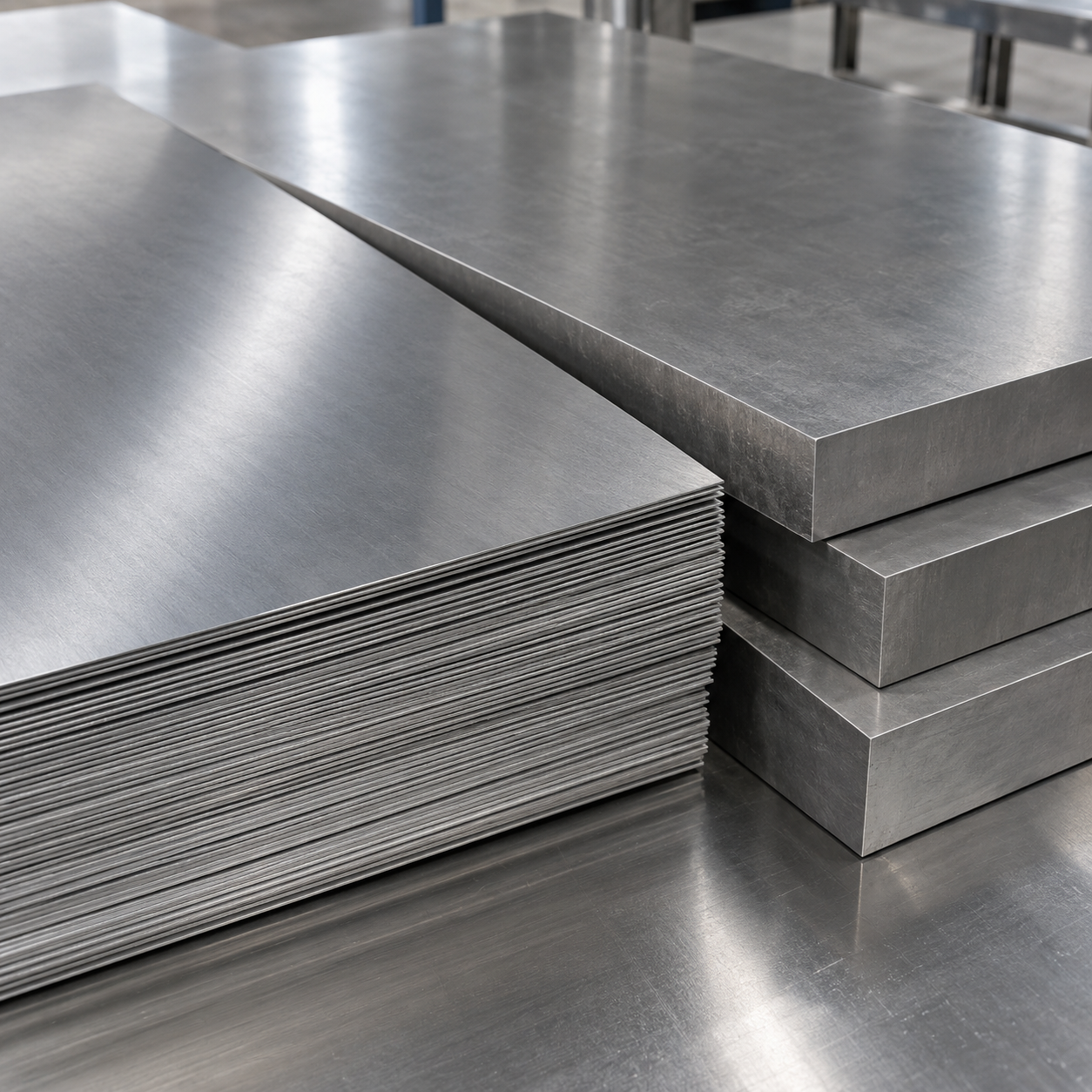
- C-103 sheet and strip – for formed and spun parts, heat shields and skins (ASTM B654).
- C-103 plate – for flanges, rings and thick machined parts (ASTM B654).
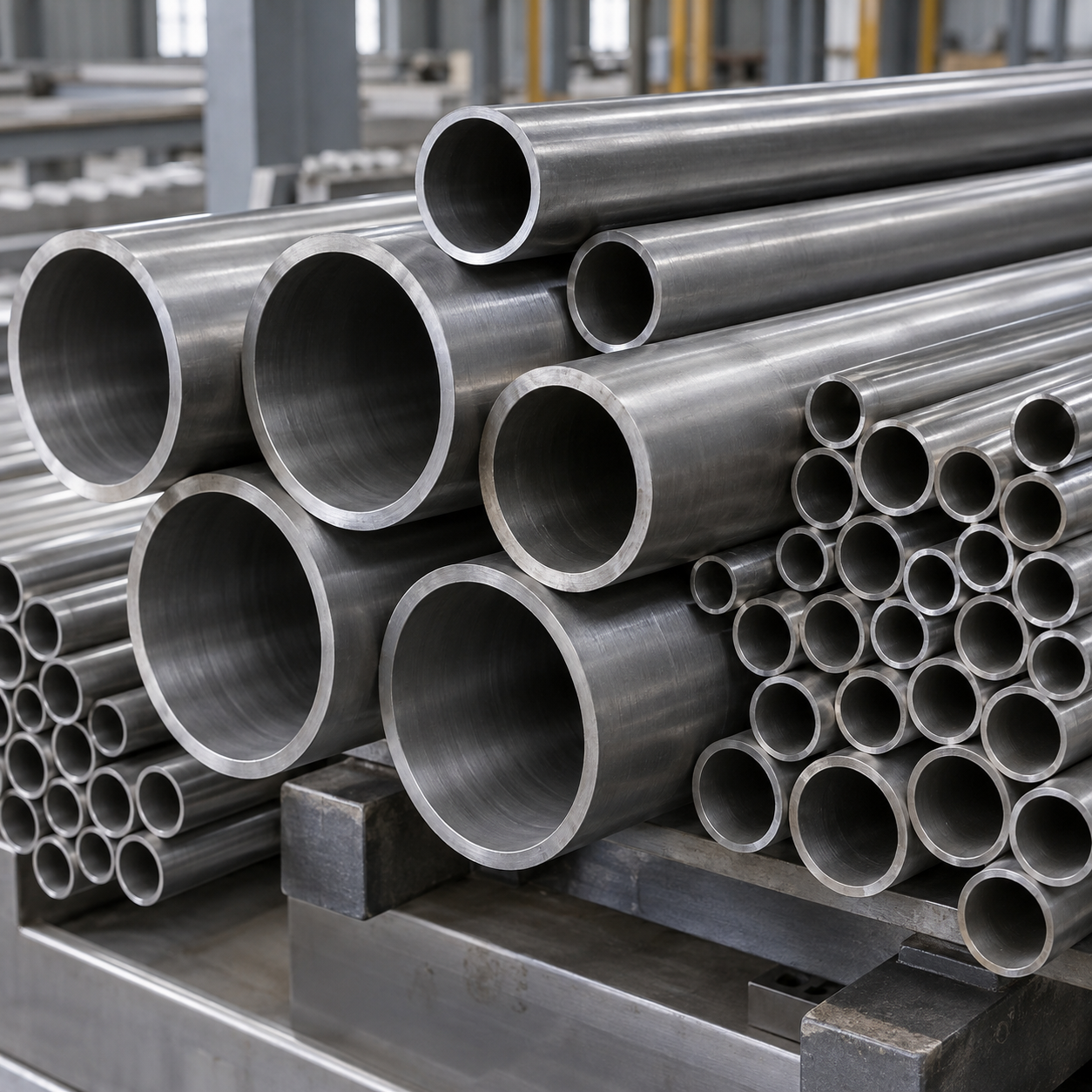
- C-103 pipe and tube – seamless and welded, made to customer drawing and specification.
- C-103 wire – for fasteners, springs and welding filler (ASTM B655).
We also supply finished C-103 components: C-103 niobium flanges, C-103 niobium pipe fittings and C-103 niobium fasteners.
C-103 Forms, Standards & Supply Range
| Form | Standard | Condition | Sizes |
| Round bar / rod | ASTM B655, AMS | Annealed (recrystallized) | On request |
| Sheet / strip | ASTM B654, AMS | Annealed | On request |
| Plate | ASTM B654, AMS | Annealed | On request |
| Seamless / welded pipe & tube | Customer specification / drawing | Annealed | On request |
| Wire | ASTM B655 | Annealed or cold drawn | On request |
| Ingot (feedstock) | ASTM B652 | As cast | — |
All material is supplied with EN 10204 3.1 mill test certificates showing chemistry, interstitials (C, O, N, H) and mechanical properties. Cut-to-size pieces are available.
Chemical Composition of C-103 Niobium Alloy (UNS R04295)
| Element | Composition (wt %) |
| Hafnium (Hf) | 9.0 – 11.0 |
| Titanium (Ti) | 0.7 – 1.3 |
| Zirconium (Zr) | 0.70 max |
| Tantalum (Ta) | 0.50 max |
| Tungsten (W) | 0.50 max |
| Carbon (C) | 0.015 max |
| Oxygen (O) | 0.0225 max |
| Nitrogen (N) | 0.015 max |
| Hydrogen (H) | 0.0010 max |
| Niobium (Nb) | Balance (≈ 89%) |
Limits per ASTM B654 / B655. Interstitial elements (C, O, N, H) are kept very low because they reduce ductility.
Mechanical Properties of C103 Niobium Alloy
| Property | Room temperature (annealed, min.) | At 1,095 °C / 2,000 °F (typical) |
| Ultimate tensile strength | 370 MPa (54 ksi) | 145 MPa (21 ksi) |
| Yield strength (0.2% offset) | 260 MPa (38 ksi) | 110 MPa (16 ksi) |
| Elongation | 20% | ≈ 20% |
Room-temperature values are specification minimums for bar and wire 0.051 in (1.3 mm) diameter and larger; elevated-temperature values are typical.
C-103 Specifications & Designations
| System | Designation |
| Common names | C-103, C103, Nb-10Hf-1Ti, niobium alloy 103 |
| UNS | R04295 |
| ASTM | B652 (ingot), B654 (sheet, strip, plate), B655 (bar, rod, wire) |
| AMS | AMS 7852, AMS 7857 |
| Delivery condition | Annealed, fully recrystallized |
C-103 is a niobium alloy in its own right – it is not covered by ASTM B391–B394, which are written for unalloyed niobium and Nb-1Zr grades.
High-Temperature Use, Coatings & Heat Treatment
| Topic | Details |
| Useful service temperature | Up to about 1,370 °C (2,500 °F) for structural parts; short excursions higher |
| Oxidation | Oxidises rapidly in air above about 600 °C – hot parts in air need a protective coating |
| Typical coating | Silicide coatings such as R512E (Si-Cr-Fe), applied after machining and forming |
| Vacuum / inert service | Can be used uncoated in vacuum (space) or inert atmosphere |
| Annealing | Recrystallization anneal in vacuum or inert gas (around 1,260 °C); never in air |
Physical Properties of C-103
| Property | Value (approx.) |
| Density | 8.85 g/cm³ (0.319 lb/in³) |
| Melting point | ≈ 2,350 °C (4,260 °F) |
| Crystal structure | Body-centred cubic (single phase) |
| Magnetic | Non-magnetic |
C-103 vs Pure Niobium vs Nb-1Zr
| Property | Pure niobium (R04200) | Nb-1Zr (R04251) | C-103 (R04295) |
| Main alloying | None | 1% zirconium | 10% hafnium + 1% titanium |
| Room-temp tensile, min. | 125 MPa | 195 MPa | 370 MPa |
| Room-temp yield, min. | 73 MPa | 125 MPa | 260 MPa |
| High-temperature strength | Low | Moderate | High |
| Typical use | Chemical equipment, superconductors, sputtering | Nuclear, sodium-vapour lamps, liquid-metal systems | Rocket nozzles, thrusters, hot aerospace structures |
| Our products | Niobium products | Niobium fittings | This page |
Room-temperature minimums for annealed material per the relevant ASTM standards. Choose C-103 when the part must carry load at high temperature; pure niobium or Nb-1Zr when corrosion resistance or nuclear compatibility matters more than strength.
Applications of C103 Niobium Alloy
| Industry | Applications |
| Space propulsion | Liquid-rocket and satellite thruster nozzles, nozzle extensions, thrust chambers, injectors |
| Aerospace & defence | Hot structures, heat shields, leading edges, missile and hypersonic components |
| Jet engines | Afterburner and exhaust components, turbine hot-section parts |
| Nuclear & energy | High-temperature reactor and liquid-metal system parts |
| Industrial | Vacuum furnace fixtures, heating elements and hardware |
| Additive manufacturing | C-103 powder and wire feedstock for 3D-printed propulsion parts |
Machining & Welding C-103
- Machining: C-103 machines like a soft, gummy metal – use sharp carbide or HSS tools, positive rake, low speeds and plenty of coolant.
- Forming: sheet can be bent, spun and deep-drawn at room temperature thanks to its ductility.
- Welding: TIG or electron-beam welding in a high-purity argon chamber or vacuum; any oxygen or nitrogen pick-up makes the weld brittle.
Why Buy C-103 Niobium Alloy from ASC LLP?
- Full range: C-103 bar, rod, sheet, strip, plate, pipe, tube and wire, plus flanges, fittings and fasteners.
- Certified material: ASTM B654 / B655 and AMS, with EN 10204 3.1 certificates including interstitial analysis.
- Cut-to-size and export-ready: cut pieces, small quantities and secure export packing.
- Technical support: help with grade selection between pure niobium, Nb-1Zr and C-103.
Related products
Frequently Asked Questions – C-103 Niobium Alloy
What is C-103 niobium alloy?
C-103 (also written C103) is a niobium alloy with about 10% hafnium and 1% titanium, designated UNS R04295. It combines high strength up to about 1,370 °C with good room-temperature ductility and weldability, and is widely used for rocket and thruster nozzles.
What is C-103 made of?
C-103 contains 9–11% hafnium, 0.7–1.3% titanium, up to 0.7% zirconium and small amounts of tantalum and tungsten, with niobium as the balance (about 89%).
What is the maximum service temperature of C103 niobium alloy?
C-103 keeps useful structural strength up to about 1,370 °C (2,500 °F). In air it must be protected by a silicide coating above about 600 °C; in vacuum it can be used uncoated.
What specifications cover C-103?
C-103 is covered by ASTM B652 (ingot), ASTM B654 (sheet, strip and plate) and ASTM B655 (bar, rod and wire), as well as AMS 7852 and AMS 7857.
What is the density of C-103?
The density of C-103 is about 8.85 g/cm³ (0.319 lb/in³), lower than tantalum, molybdenum or tungsten alloys.
Can C-103 be welded?
Yes. C-103 is readily TIG or electron-beam welded in a high-purity inert atmosphere or vacuum without significant loss of ductility.
What is the difference between C-103 and Nb-1Zr?
Nb-1Zr contains only 1% zirconium and is used mainly for nuclear and liquid-metal service. C-103 adds 10% hafnium and 1% titanium, giving roughly twice the room-temperature strength and much better high-temperature strength.
In what forms does ASC LLP supply C-103?
We supply C-103 round bar and rod, sheet and strip, plate, seamless and welded pipe and tube, and wire, plus C-103 flanges, fittings and fasteners.
Global Reach
ASC LLP supplies niobium and refractory alloys to aerospace, space and industrial customers around the world, with prompt delivery and full documentation. Customers in the USA, Europe, the Middle East and Asia rely on our C-103 niobium alloy for consistent chemistry and certified properties.

Countries We Export To
UNITED STATES, EUROPE, UK, UAE, SAUDI ARABIA, OMAN, KUWAIT, JORDAN, QATAR, INDONESIA, MALAYSIA, BRAZIL, SPAIN, ITALY, FRANCE, GERMANY, BAHRAIN, SRI LANKA, AZERBAIJAN, AUSTRALIA, AUSTRIA, PHILIPPINES, TURKEY, RUSSIA, IRAN, IRAQ, CANADA, KOREA, JAPAN, YEMEN, FINLAND, ZIMBABWE, HUNGARY, PORTUGAL, VIETNAM, MOROCCO, THAILAND, SOUTH AFRICA, MEXICO, SINGAPORE, GREECE, KUWAIT, POLAND, NEW ZEALAND, SWEDEN, SWITZERLAND, BELGIUM, BHUTAN, BANGLADESH, TAIWAN, ROMANIA, CAMBODIA, KAZAKHSTAN, AFGHANISTAN.
